
How Clark County Finds People
Clark County has no single index that searches every person record. Start with the event or relationship that likely created a file. A current owner name belongs in the Assessor roll. A seller, buyer, borrower, lien claimant, or trustee may appear in the Recorder index. A lawsuit or probate matter belongs with the court that heard it. Marriage records sit with the Clerk, while recent birth and death certificates have strict access rules.
A phone number alone may lead to a current public office or licensed business listing, but official Clark County records work best with a name, address, parcel number, case number, or date. Use the known fact first, then build a second link. Common names are frequent in this large and mobile county.
- Write the full name, former name, date range, and known Clark County place.
- Use an address in the Assessor search to find an owner and parcel number.
- Carry that name or parcel into the Recorder index to identify filed documents.
- Check the proper court portal for cases, probate, or a divorce record.
- Compare two independent details before treating two Clark County records as one person.
Note: A shared name is a starting point, while matching dates, roles, addresses, and record numbers make an identity link much stronger.
Clark County Records Office Roles
The custodian split matters. The Recorder indexes deeds, liens, releases, plats, and other authorized instruments. The Clerk keeps the county marriage system and fictitious firm names. The Assessor publishes the ownership and valuation roll, but it does not replace the recorded deed. District Court keeps civil, criminal, family, divorce, and probate files within its jurisdiction. Detailed access rules and copy procedures belong with the Clark County public records system.
Clark County Recorder
Attention Records Request
Box 551510, Las Vegas, NV 89155-1510
Clark County Clerk
Marriage and fictitious firm name records
Coverage begins with Clark County in 1909
Clark County Assessor
Owner, address, parcel, and subdivision searches
Current assessment roll and parcel detail
District Court Clerk
200 Lewis Avenue, Las Vegas, NV
(702) 455-2590
District and Family Court records gateway
The Clerk and Recorder sound alike but hold different record sets. A Las Vegas wedding search goes to the Clerk. A deed naming the same spouses goes to the Recorder. The Assessor may show the current taxable owner, while the deed index explains how title moved.
Search Clark County Recorder Names
The Recorder Acclaim system offers several routes into Clark County land records. A name search works for an individual or company. Instrument number, document type, record date, book and page, parcel number, total value, and legal description provide other paths. Official Records are indexed online from 1988, UCC documents from 1986, and federal tax liens from 1984. Older Clark County indexes remain available on microfilm.
The Recorder search menu shows the available record-search routes before a user chooses a form.
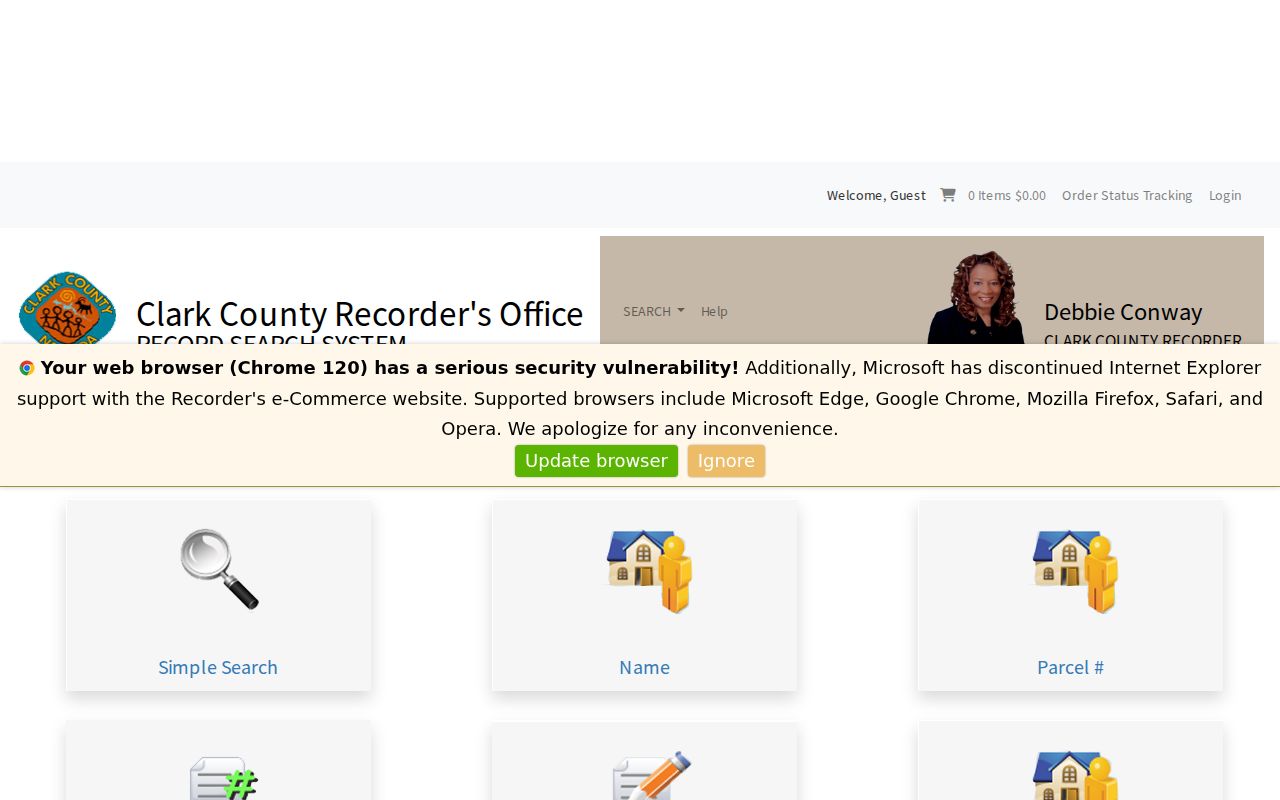
The menu is useful when a name spelling fails because an instrument number, parcel, or date can reach the same Clark County record from another direction.
| Recorder field | Entry | How it narrows a person search |
|---|---|---|
| Last Name / Company | Required in name mode | Finds an indexed person or entity |
| First Name | Optional | Separates people with the same surname |
| Instrument Number | Exact number | Returns a known recorded filing |
| Document Type | Category | Limits results to deeds, liens, or another class |
| Record Date | Date | Focuses the index on the filing period |
The dedicated grantor and grantee name form exposes surname, first name, company, match type, book type, date range, shown names, and document type.
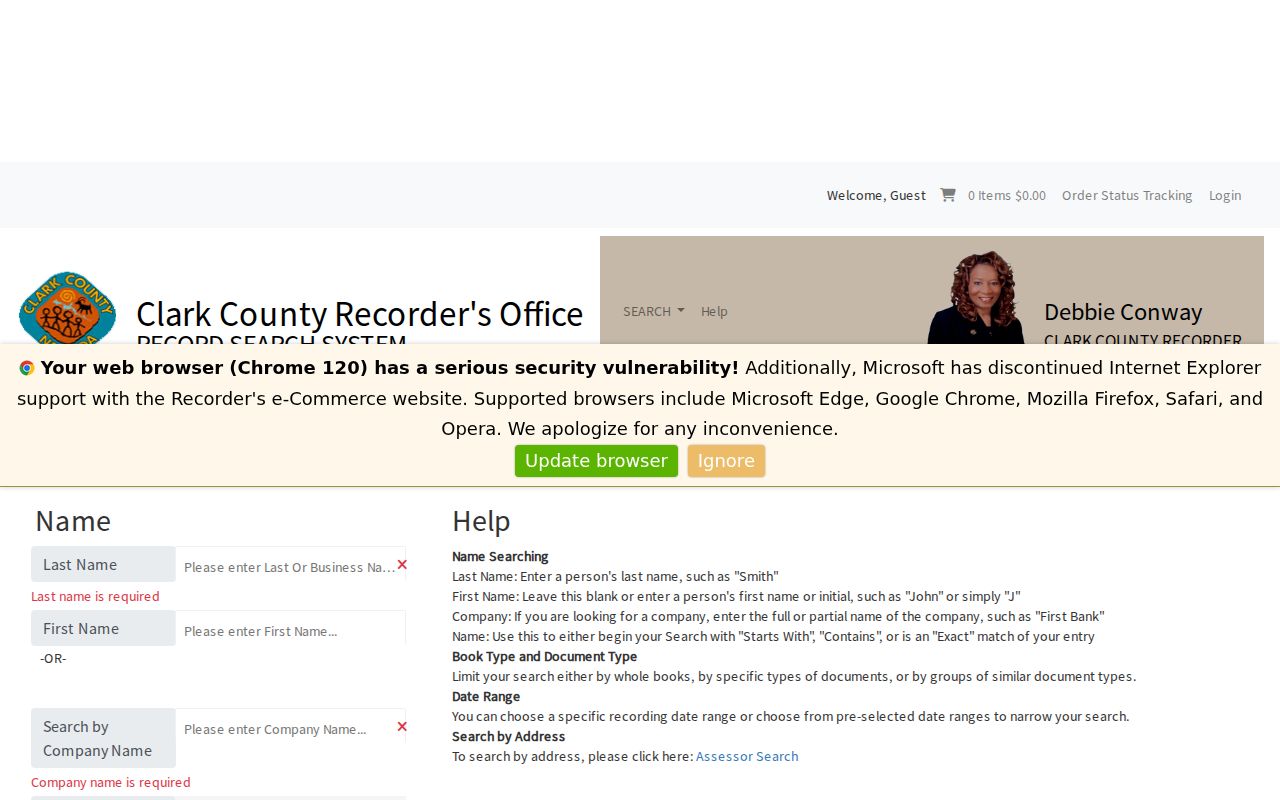
Starts With, Contains, and Exact options help preserve spelling variants, entity punctuation, and former surnames in a Clark County records search.
Clark County Property Records Trail
An old or current street address can become a person trail through the Assessor. Search modes include parcel number, owner name, address, subdivision name, subdivision owners, parcel type with book and page, and a parcel-number tree. The parcel card can show owner and mailing address, physical location, legal description, subdivision, values, sale references, and recorded document links. A parcel number, often called an APN, is the county's 11-digit property identifier.
Mailing and situs addresses are not the same. Situs means the physical location of the land. A mailing address is where the tax notice goes, and it may point outside Clark County. Neither proves where a person now lives. Confirm ownership by following the recorded conveyance and its party roles.
The Clark County OpenWeb GIS places parcel records within jurisdiction, zoning, political, service, and planning layers.
The map helps decide whether a Las Vegas mailing address is actually inside the city or in an unincorporated community before a user chooses a permit or municipal records office.
Note: Assessor maps support tax administration and are not surveys; recorded deeds and plats control the legal land description.
Clark County Court Records by Name
Court records divide by place and case type. The Eighth Judicial District Court handles felony criminal cases, larger civil matters, probate, and divorce or family files. Las Vegas Justice Court covers its township docket, including misdemeanors, preliminary felony proceedings, limited civil matters, and traffic. Other townships have their own Justice Courts. Las Vegas Municipal Court is a separate city court. Nevada appellate cases use a statewide case search, and federal filings use PACER.
| Clark County court route | Typical named record | Fallback |
|---|---|---|
| Eighth Judicial District Court | Civil, criminal, probate, divorce | Clerk counter or file request |
| Las Vegas Justice Court | Township case and party index | Justice Court clerk |
| Las Vegas Municipal Court | City ordinance and traffic case | Records research form |
| Nevada appellate courts | Appeal docket and public filings | Appellate clerk copy |
A docket is the chronological list of filings, hearings, and case events. It may show a caption, case number, parties, counsel, dates, status, and disposition, but not every document image. Sealed matters, juvenile records, adoption files, and protected family information stay restricted. Older District Court records may require mail or counter research, especially for files from 1909 through 1990.
The District and Family Court records gateway routes users by division and record type.
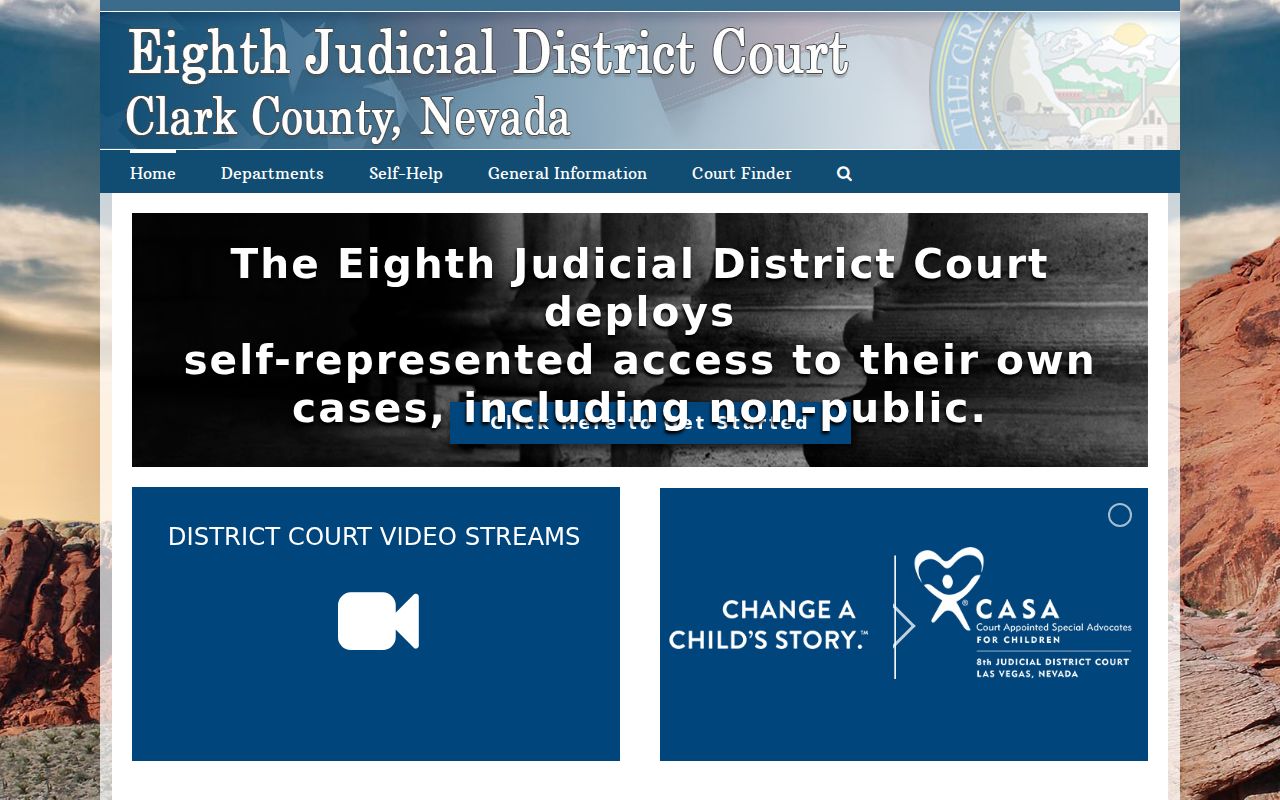
Choosing the correct court first prevents a false no-result caused by searching the right name in the wrong Clark County system.
Clark County Vital Records Paths
Birth and death certificates follow a protected route. The Southern Nevada Health District issues Clark County copies, and the Nevada Office of Vital Records is the statewide custodian from July 1, 1911. State guidance protects birth records for 125 years and death records for 50 years. NRS 440.650 and NAC 440.070 require a qualifying relationship or legal need for protected certified copies. A Clark County birth or death certificate costs $25 according to the researched fee schedule.
Marriage and divorce use different Clark County custodians. The Clerk's public marriage search covers 1909 to the present by names and year or certificate number, but images are not freely displayed. District Court holds divorce decrees, subject to sealing and redaction. If the county or date is unknown, Nevada offers a $10 verification search that identifies when and where the event occurred, then the county supplies the actual record.
- Index
- A list that points to a record; it is not the certified record itself.
- Certified copy
- A custodian-issued copy carrying official certification.
- Decedent
- The person whose death is recorded.
- Divorce decree
- The court order ending a marriage, obtained from the court that entered it.
Clark County Voter Records Boundary
Registered Voter Services is an identity-gated tool for a voter to view a personal Clark County registration, voting history, representatives, and mail-ballot status. It is not a broad name-only finder. Clark County also publishes voter-list data under NRS 293.557 and NRS 293.558, but Social Security numbers, driver's license or state ID numbers, and election-process email addresses remain confidential. Address and telephone fields can be withheld after a proper request.
Participation history shows that a voter took part in an election. It never shows ballot choices. Protected fields are excluded from public files, and Nevada's Confidential Address Program provides an added route for qualifying people. The full lookup, file layout, status codes, and confidentiality process are covered with the Clark County voter records.
Use Clark County records only for lawful personal and civic purposes. Never use an address, voter field, court entry, or custody record to stalk, threaten, harass, or harm anyone.
Clark County Business Records Trail
A business name may point to several different people, and each Clark County records system answers a different question. Nevada SilverFlume identifies a legal entity, status, registered agent, filing address, and managers or officers when filed. The Clark County Clerk's fictitious firm name index can identify an assumed name and its filers. A city or county license can connect the operator to the place where the business works.
- Search SilverFlume by legal entity name or number.
- Check the Clerk for a fictitious firm name used in Clark County.
- Resolve the physical address to Las Vegas, another city, or unincorporated Clark County.
- Use the proper local license system for the operator and location.
- Compare the Assessor owner because the venue, operator, and landowner may differ.
Professional boards and the State Bar add license number, status, public contact, and discipline links where authorized. Gaming records are especially useful in Clark County because licensed-location and corporate reports can separate a casino brand from its regulated operator and property owner.
Note: A legal entity, licensed operator, trade name, and parcel owner can be four different Clark County records identities.
Clark County Custody Records Search
Current jail and prison information comes from separate systems. Clark County Detention Center accepts an inmate name, inmate ID, or Justice Court case number. Its name route requires at least two surname letters, and more letters reduce weak matches. People under 18 and those in protective custody are excluded. Results update during the day, so the detention center's phone channel is the fallback for current information.
The Nevada Department of Corrections offender search uses an offender ID or first and last name, with a percent-sign wildcard supported by the system.
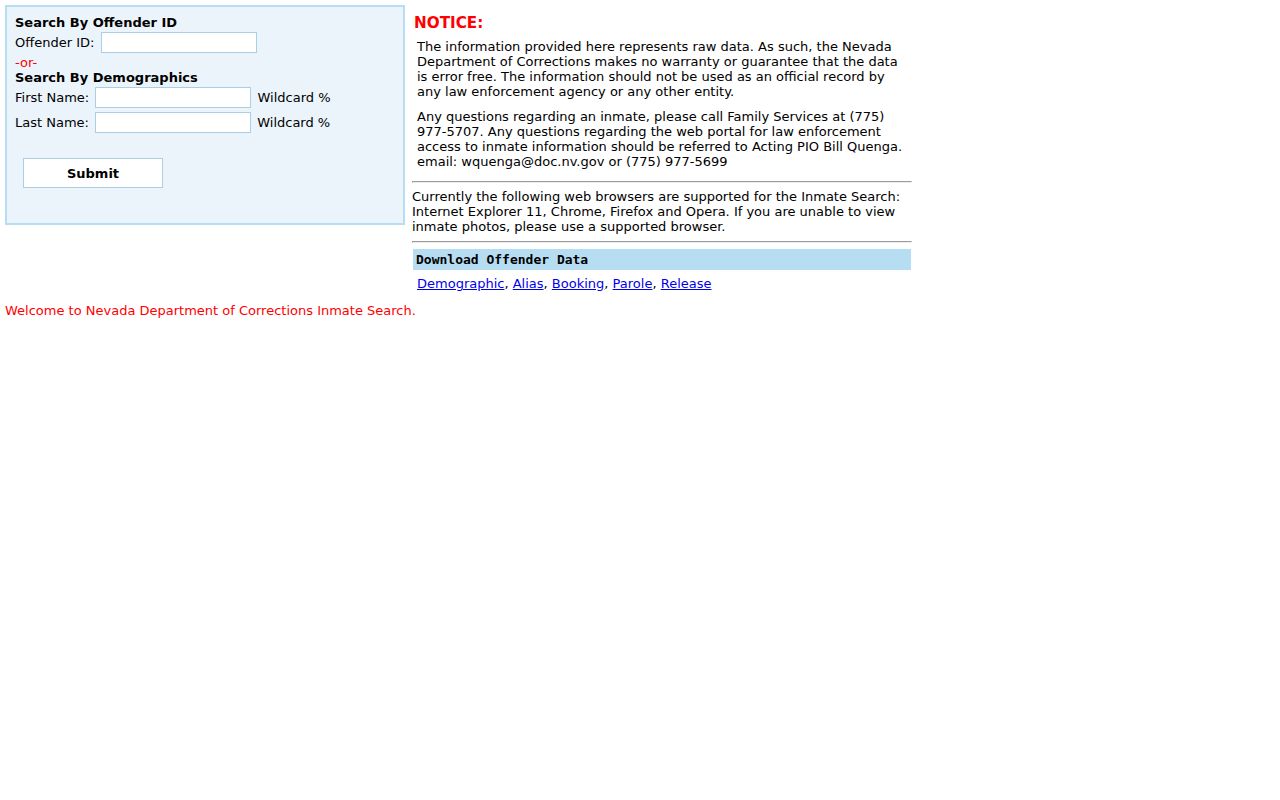
The state result may include demographics, aliases, booking or sentence data, location, and parole or release information. NDOC warns that the web display is raw data, not an official law-enforcement record.
A missing name in one system does not prove the person is absent from custody. CCDC covers county jail custody, NDOC covers sentenced Nevada prison custody, and a federal locator covers federal custody. Police reports also stay with the agency that responded, which may be Las Vegas Metropolitan Police or another city department.
Clark County Marriage Records Since 1909
Marriage tourism makes the Clark County Clerk archive a major surname and date resource. Search by both parties' names and an optional marriage year, or enter the certificate number. The Clerk states that certificates are available for all Clark County marriages from 1909 forward. Search access is free, while the record image is not openly shown online.
A certified marriage certificate or abstract costs $20, and a certified license costs $6.50. These products are not interchangeable. The completed certificate proves that the ceremony occurred. A license or application may contain other details and protected identifiers. Mail orders use a cashier's check or money order, not cash or a personal check, and U.S. delivery may take up to three weeks.
Note: The Clark County Clerk keeps marriage records, while the Recorder keeps deeds and other authorized land instruments.
Clark County Records Before 1988
More than ten million older Recorder records are preserved on microfilm from Clark County's creation in 1909. The 1988 start of the web Official Records index is only a digital cutover. It is not a loss date. Earlier deed, lien, and related name searches require microfilm or Recorder staff help. For a pre-1988 copy order, the researched procedure says to email for a page count before mailing payment so the amount is exact.
The county boundary adds another historical hinge. Clark County was formed from Lincoln County in 1909, so earlier Las Vegas Valley land, probate, and court evidence may sit under Lincoln County or in state and territorial collections. Statewide birth and death registration began in 1911. Events before that date may need cemetery, church, newspaper, county register, or archive records.
- Before 1909: Check Lincoln County and Nevada territorial or state sources.
- 1909 onward: Clark County Recorder microfilm and Clerk marriage coverage begin.
- July 1, 1911 onward: Nevada statewide birth and death custody begins.
- 1988 onward: Clark County Official Records become searchable in the web index.
Route Clark County Address Records
A Las Vegas postal address does not establish City of Las Vegas jurisdiction. Paradise, Winchester, Spring Valley, Enterprise, Sunrise Manor, and other unincorporated communities often use Las Vegas in mailing addresses while Clark County supplies many public services. Henderson, North Las Vegas, Boulder City, Mesquite, and Las Vegas maintain separate city systems. ZIP codes do not settle the issue.
Use the GIS jurisdiction layer before searching permits, code cases, municipal court records, or business licenses. An address can then move through a compact process: jurisdiction to Assessor parcel, parcel to owner, owner or APN to Recorder deed, and deed parties back through earlier transfers. For a renamed or renumbered street, compare subdivision plats, old directory street guides, Assessor map history, and newspaper notices.
Clark County APNs changed on a broad scale by the end of 1996. A researcher holding an old parcel number should use current and prior owner options, the parcel-number tree, and title transaction history rather than assuming the old number remains current.
Clark County Family History Records
A deceased resident can connect to living relatives through probate captions, petitions, wills, notices, obituaries, cemetery records, and marriage evidence. Start with a death date and place. Search the Eighth Judicial District Court for a probate case, then use obituary databases for named kin, schools, groups, and service locations. Each source has a different purpose, so agreement across them is more useful than any single name match.
The Las Vegas-Clark County Library District catalog can route searches to city directories, telephone books, school yearbooks, newspapers, and Nevada history. Licensed genealogy products may require a library card or in-library use. UNLV Special Collections adds Southern Nevada oral histories, manuscripts, photographs, maps, casino and entertainment collections, and community archives. For an old address, a reverse or criss-cross directory may identify an occupant before modern property tools identify the owner.
Official evidence confirms the record kept by its custodian. Newspapers and archives supply context, former names, migration stories, and relationships that formal indexes can omit. Preserve middle initials, suffixes, and dates while moving between sources.
Note: Confirm the exact directory year or archive folder before assuming that a named Clark County collection has continuous coverage.
Request Clark County Records Offline
Online portals stop at confidential fields, sealed files, archive cutovers, and records held by another custodian. Nevada's Public Records Act, NRS Chapter 239, provides a fallback for an identifiable existing public record. Under NRS 239.0107, an agency has five business days to produce it, deny access with legal authority, identify a known custodian, or give a written availability date. The response deadline does not always mean final production in five days.
Describe the record, office, names, roles, date range, and any case, instrument, parcel, or license number. Ask for inspection or an electronic copy first, then plain or certified copies when needed. If staff estimate extraordinary work, request the cost in advance. If part of a mixed record is confidential, ask for the public portion with protected material redacted.
| Source type | Best use | Main limit |
|---|---|---|
| Official index | Find a case, parcel, party, or instrument | An index is not a certified copy |
| Custodian request | Reach an offline file or obtain a copy | Confidential and sealed material stays protected |
| Commercial compilation | Suggest a possible lead | Data may be stale or link the wrong relatives |
Finish by checking a second independent Clark County record. A Recorder party might be a lender or trustee rather than an owner. An Assessor owner might be an entity. A court caption can contain an unrelated person with the same name. Record numbers, roles, dates, and places turn a possible match into a sounder person trail.